There are some foods we remember because they were delicious. And then there are foods that somehow remember us.
Tandoori tikka belongs to the second kind.
We may forget the restaurant. We may forget what year it was. We may even forget what everyone was talking about that evening. But somewhere, years later, smoke rises from a tandoor, roasted spices hit the air, and before the mind has figured out what is happening, we are back there.
At that roadside stall. At that wedding. At that family dinner. Standing beside someone we loved. Fighting over the darkest piece on the skewer.
Perhaps we never really forgot. Perhaps the smell simply knew where the memory was stored.
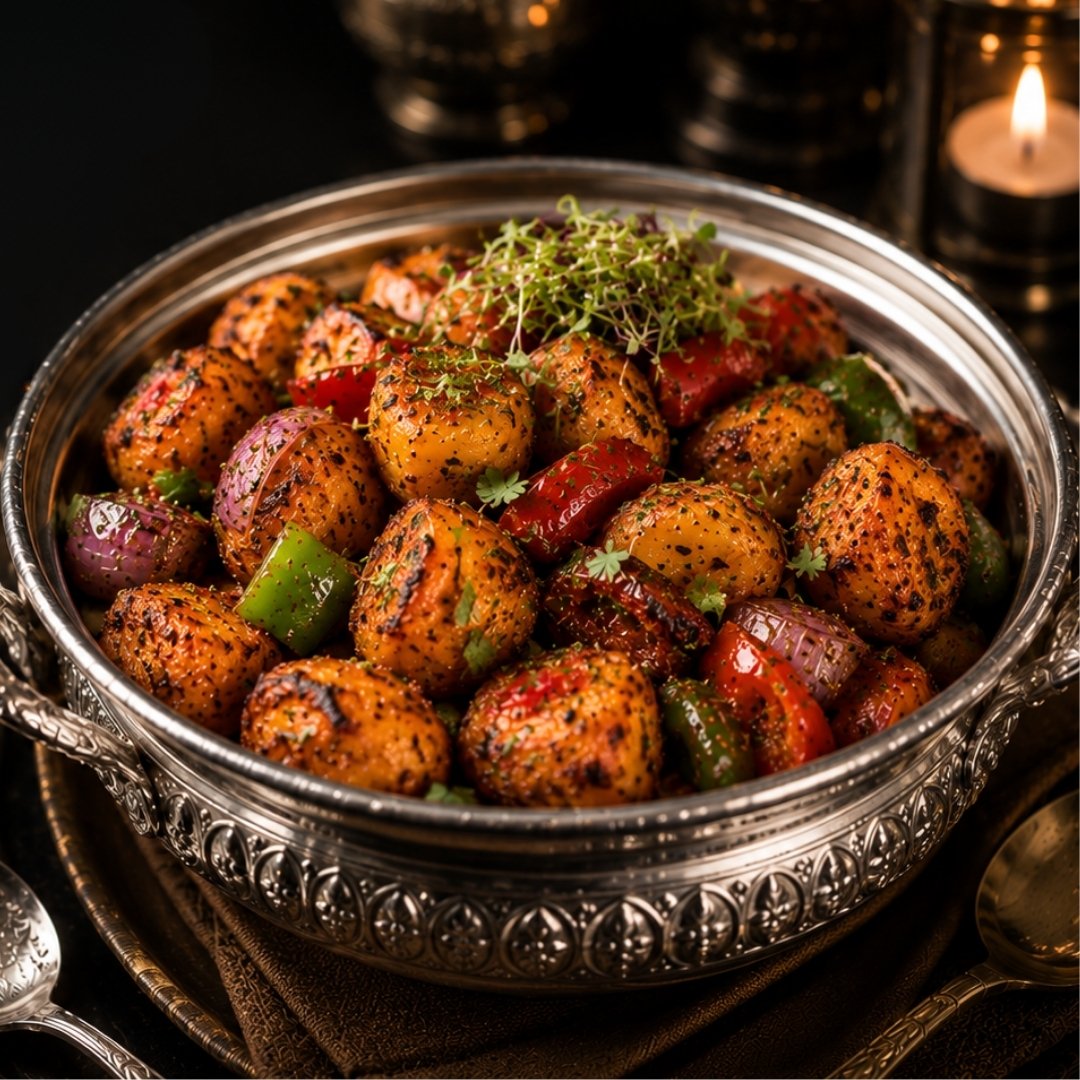
Tandoori tikka announces itself before it arrives. There is the smoke first, then the warm fragrance of roasted spices, followed by something sweet beginning to caramelise in fierce heat. The edges darken. The surface catches little patches of char. The aroma grows louder.
And suddenly nobody at the table is behaving with complete dignity.
Someone wants the most charred piece. Someone wants the one with less heat. Someone has already taken a piece while everybody else was still discussing how to divide the plate fairly.
Food reveals people rather quickly.
Maybe that is why tikka has always felt less like an individual dish and more like a shared experience. It naturally lands in the middle. Hands reach towards it. Skewers are passed around. Pieces disappear. At weddings and roadside stalls alike, there is something wonderfully democratic about a plate that everybody is watching.
But what creates that unmistakable smell and taste?
Hidden inside that familiar flavour are two salts, two sugars and three different chillies.
Sendha namak, the pink rock salt familiar from Indian fasting traditions, forms the largest part of the seasoning. Alongside it sits kala namak, described in Ayurveda as the best among salts, with a cool potency gentle on the stomach.
Then sweetness enters. White sugar and brown sugar may sound surprising in something we remember for smoke and spice, but they create the part of the experience we love most: those caramelised, darkened edges. Brown sugar adds its deeper molasses note beneath the char.
And chilli is not simply chilli. Kashmiri chilli is there for colour with milder heat. Red chilli brings another character. Cayenne adds a sharper fire. The heat we experience is not one loud note. It has layers.
Then, underneath all of them, something rather beautiful happens. There is roasted coriander, kasuri methi, amchoor, turmeric, dry ginger, tamarind, cumin, black pepper, cinnamon, hing, amla and mint. And deeper still are whole roasted spices used in tiny whispers: green cardamom, black cardamom, nutmeg, mace, clove, nag kesar, white pepper, fennel, star anise, bay leaf and trifala. Several sit at around 0.13 percent each.
Almost nothing individually. Yet together, they create the low hum beneath the aroma.
There is something deeply familiar about that idea. The memories that make a meal unforgettable are often made the same way. Nothing seems important enough to remember at the time. A chair being pulled out. Someone laughing. A hand passing a plate. The person who always chose the burnt edge. Tiny things. And years later, somehow, they have become the whole evening.
Indian spice wisdom read these ingredients long before laboratories did. Roasted coriander is the rare spice the old texts describe as cooling while still waking digestion. Cumin was prized for kindling the digestive fire and awakening taste. Amchoor — the sourness of unripe mango — was valued as the sourness that makes food come alive on the tongue. Modern food-composition tables add their own quiet footnote: among everything in this mixture, turmeric carries the richest iron, and cinnamon stands out for calcium and fibre.
None of that makes a plate of tikka medicine. It makes it something much more honest: food made from ingredients that have their own character and long traditions of use.
There is a lovely little numerical truth hiding here too. The quantity of salt in the seasoning predicts 13,190 mg of sodium per 100 grams of the mix; an independent laboratory measured 13,011. Two completely different roads arrived within 1.4 percent of each other. There is something satisfying about a recipe keeping its own promises. (And remember — a spoonful of seasoning spreads across a whole dish; the mix is the seasoning, never the meal.)
But numbers can only take us so far. For the smell, we have to return to the spices.
Whole spices are roasted before grinding. Roasting wakes the essential oils that carry aroma, and grinding fresh keeps those volatile compounds in the powder instead of losing them to months on a shelf. Aroma compounds are volatile. They leave first.
Which explains something every Indian nose already seems to know: freshly ground masala smells louder. Open it and the fragrance almost reaches for you.
Then heat enters the story. Sweetness caramelises. Smoke wraps itself around everything. Sourness cuts through richness. Salt pulls the flavours forward. And then comes the first bite.
"Taste is the body's first language. Before thoughts form or emotions register, taste delivers information — what is safe, what is nourishing, what is alive."
Perhaps this is why certain foods become part of our identity without asking permission. We have our piece. The darker one. The softer one. The fiery one. The one we insist nobody touch while simultaneously stealing from everybody else's plate.
These preferences sound trivial until someone who knows us remembers them. Then they become affection. Someone saying, "I kept this piece for you," may contain more intimacy than an elaborate declaration of love. Because they noticed.
And food is full of noticing. Who likes what. Who takes the first piece. Who always gives someone else the last one. Who says they are full and then continues eating from everybody else's plate.
Years later, the people around that original table may be scattered across cities. The stall may no longer exist. And then someone opens a tandoor. Smoke rises. For one second, time behaves strangely. The old table is back. So is the laughter. So is the person who always grabbed the first piece.
We think we remember the taste. Very often, we are remembering who was sitting beside us when we tasted it.
And yet, somewhere between that table and this one, another ingredient quietly entered the plate.
Guilt.
We learned to call the foods we love "indulgent." We learned to say "I shouldn't" while wanting to. We learned that pleasure needs a permission slip.
The tandoori tikka did not change. The feeling we serve with it did.
But that pull you feel toward the darkest piece was never weakness. It is the memory of every person who ever kept it for you. The love came first. The guilt was added later — by voices that were never yours.
So here is a quieter thought: tikka does not need a wedding. Smoke does not check the calendar. The dish you have been saving for occasions can live in a Tuesday kitchen, on an ordinary evening, with the people you already have. Don't wait for pleasure moments. Make the daily meal the celebration — and there is nothing left to deny, and nothing left to feel guilty about.
If tandoori tikka is one of your favourite foods, but somewhere along the way it became wrapped in "I shouldn't" — forward this to the person who understands that exact contradiction. The one who says "you all have it" and then quietly eats from everyone else's plate.
Eat it together. Soon. On a day that isn't special — until it is.
Kya pata kal ho na ho.
Happiness is health.