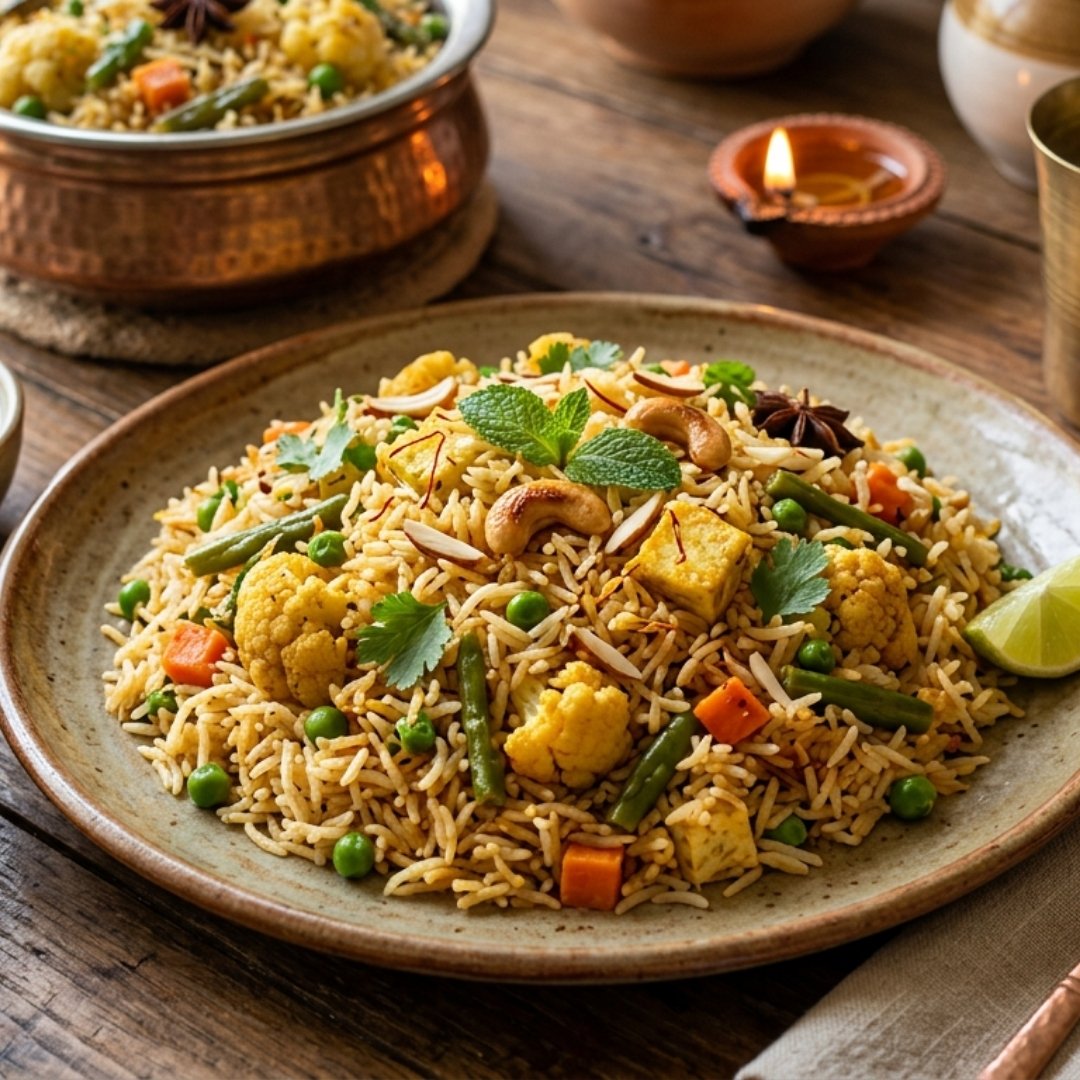
The lid comes off the deg at 9:40 p.m., and the wedding changes shape.
Until this moment there were three hundred separate people here — discussing traffic, comparing lehengas, pretending to enjoy the paneer-free starters. Then the steam rises, carrying saffron and fried onion and something warmer underneath, and three hundred people become one organism with a single intention.
Watch the queue form. It is a masterpiece of diplomacy. The uncle who arrives from the side at a forty-five degree angle, technically not cutting the line, merely existing adjacent to it. The aunty holding two plates — "one is for my husband," she says, of a husband nobody has seen since the varmala. The child sent forward as an ambassador because children can get away with anything. And at the far table, one man guarding six chairs with a napkin, a shawl, and the moral authority of a border patrol, waving away all challengers: these seats are taken, the biryani is coming.
Nobody behaves this way at the salad counter.
And standing there, plate in hand, watching perfectly dignified adults negotiate rice, a small question arrives:
If biryani can do this to a Wednesday-night wedding — what did an ordinary Wednesday do to deserve less?
We learned the answer young, without anyone saying it aloud. Biryani appeared when the house filled with people. Weddings, Eid at the neighbours', a cousin's admission to engineering college, someone's transfer finally coming through. The big pot came out for big days. On regular days, the answer was the look, and the sentence every one of us has heard: "Not today. It's not an occasion."
So the rule installed itself quietly, the way house rules do. Celebration food is rationed food. The feast requires a reason. Joy must be justified before it may be served.
But notice — that voice was never ours. We inherited it with the dinner table.
The dish itself has never agreed to these terms. Somewhere, generations before us, someone first layered rice over spiced vegetables, sealed the lid, and trusted slow steam to do what direct fire cannot. That is the quiet genius of dum: nothing escapes. Every aroma that tries to leave is folded back in. The pot keeps its own secrets until the moment of opening — which is why the opening of a deg is an event, and a curry being stirred is merely dinner.
And what is in that aroma? Open the masala and count: fifteen things, in a strict hierarchy. Rock salt — sendha, the pink salt of fasting traditions, long considered easier to digest — takes the largest share. A measure of sweetness sits beside it, because biryani has always known that heat needs something to push against. Then roasted dhania in quantity, charmagaz for body, and two different chillies doing two different jobs — the old texts describe red chilli as katu and ushna, deepana in action: the fire that wakes a sluggish meal. Saunf answers it from the other side; the Bhavaprakasha calls it light and subtle, cooling, sweet in its after-effect — the gentle digestive of the Indian kitchen. Then the whisper section: haldi, pudina, javitri, lavang, kasturi methi, a single roasted tej patta — warming and aromatic, the quiet leaf beneath the whole masala — and nag kesar, the temple-flower spice of the deepest garam masalas, present at barely one percent.
Almost nothing individually. Together, a crowd. A wedding of spices, if you like — each one behaving exactly like the guests at the deg.
Here is a small numerical pleasure, for those who enjoy a recipe that keeps its word: the amount of salt in that masala predicts roughly 14,000 mg of sodium per 100 grams of mix; an independent laboratory panel measured about 13,600. Two entirely separate roads, arriving within a few percent of each other. (And remember the arithmetic of seasoning — a spoonful of masala disperses across an entire pot; the mix is the seasoning, never the meal.)
But the masala is only half the pot. The other half is people.
Because biryani is never plated; it is distributed. Someone digs for the fried onions. Someone excavates the bottom layer where the masala concentrates. Someone announces they'll take "just a little" and returns twice. Someone swears they are full, then eats steadily from the plate beside them. There is a person at every table who performs the ritual archaeology of lifting the rice gently, layer by layer, and scolds anyone who stirs it like an amateur.
Years later, this is what the aroma brings back. Not the menu — the people. Steam rises from a pot somewhere, and the seat-guarding uncle returns, and the two-plate aunty, and the cousin whose admission started it all. Taste is the only sense that crosses the threshold; the outside becomes the inside. Maybe that is why it carries the people in with it.
And yet somewhere along the way, we started meeting this dish with an apology. Too heavy. Too much. Not today. The same tongue that queued for it at weddings learned to refuse it on Tuesdays — and called the refusal virtue.
But look again at what you are actually afraid of. That heaviness you brace for after biryani? Weigh it honestly. It is the weight of how much was shared.
So no — biryani was never the problem, and the calendar was never the permission slip. The deg does not know it is Tuesday. The steam performs identically over an ordinary stove, for four people, on a day nothing happened. Make the ordinary pot the celebration and the question dissolves — because every day at a table with your people is, on inspection, an occasion. Don't wait for weddings to open the lid.
Kya pata kal ho na ho.
Forward this to the one who says biryani is "too much" for an ordinary day — and ask them, gently, over a plate you've already served: what exactly did an ordinary day do to deserve less?
Happiness is health.