Every word has a passport. "Cheat" got its Indian kitchen visa sometime in the last twenty years, and nobody remembers stamping it.
Trace its journey and you'll find it never came through the kitchen door at all. It arrived through gym mirrors and phone screens, through Monday-morning resolutions and apps that wanted to know everything we ate. It learned to attach itself to exactly one kind of food: the kind we love most. And then, like all successful immigrants, it started acting like it had always lived here.
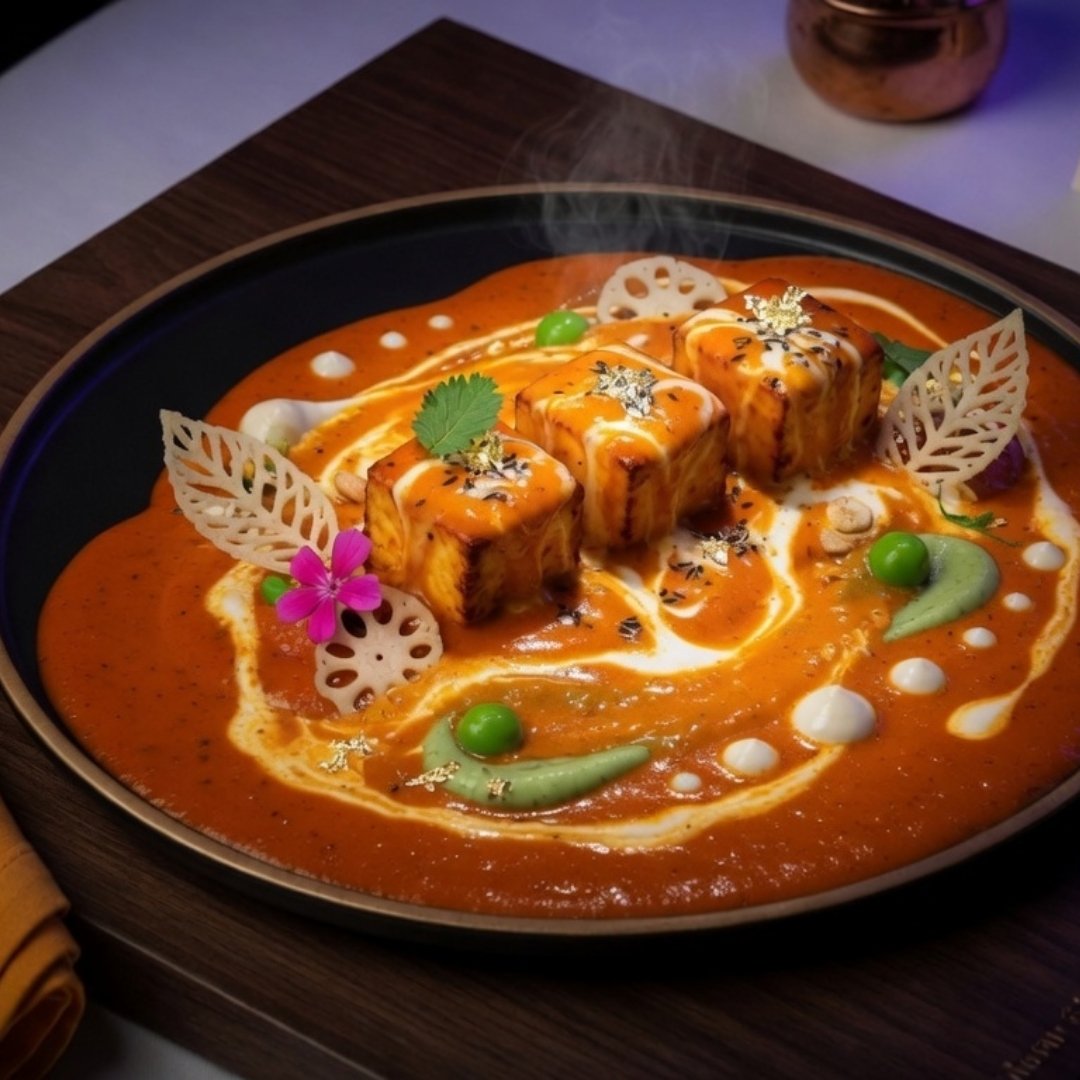
But ask yourself this. Did your grandmother ever use it? Did anyone in your family, in any generation before yours, look at a dish of butter paneer — the gravy glowing that impossible orange, a slow swirl of white cream sinking into it — and say the word "cheat"?
She had words for food. "Garam garam kha lo." "Thoda aur?" "Bas? Itna sa?" There was an entire vocabulary at that table, and every word in it was a form of insisting you be happy. Cheat was not in the dictionary. Neither was sin. Neither was that strange two-word contraption, "guilty pleasure," which insists you feel bad and good at the same time, as if joy needed a chaperone.
The butter paneer didn't change. The words around it did.
Consider what the dish actually is, before language gets to it. The aroma reaches you first — tomatoes and butter, sweetness and smoke, and above it all that unmistakable perfume of kasuri methi crushed between palms at the last moment, the gesture every Indian cook makes without thinking, like a signature. Then the sight of it: paneer cubes half-submerged, soft as a promise. Then the sound of the table changing — because no dish rearranges human behaviour faster. Someone is tearing naan before the bowl has even landed. Someone announces they'll "just taste it" and is later found conducting a full archaeological survey of the gravy with the last piece of bread. Someone claims the corner of the dish where the butter pooled, and will defend it.
That is what the table actually felt like. Now hold it next to the word. Cheat.
A cheat is a deception. It needs a victim, a rulebook, a referee. Which of those was sitting at your table?
Here is a small irony worth savouring. Look inside the seasoning that gives this dish its soul — the masala beneath the makhani — and the single largest ingredient, more than a third of it, is sendha namak: pink rock salt, the salt Indian tradition reserves for fasting days, considered gentle and easy to digest. The salt of vrat, of restraint, of the most disciplined eating our culture knows — sitting quietly at the heart of the dish the new vocabulary calls a cheat. The old language and the new one, disagreeing inside the same spoonful. One of them has been here for generations. One arrived with a gym membership.
And beneath that salt, a crowd. Roasted coriander in generous measure, a little sweetness from two sugars — the quiet note that rounds the tomatoes — Kashmiri chilli lending colour more than fire, turmeric, and kasuri methi again, this time inside the masala itself. The old texts describe methi as warming, a seed traditionally taken to steady digestion and wake the appetite. Then, deeper still, more than a dozen whole roasted spices in true whispers — cardamom, mace, clove, nutmeg, star anise, bay leaf — several at six-hundredths of one percent. Almost nothing, each of them. Together, the hum you can't name but would miss instantly.
Numbers, at least, refuse to be dramatic about any of this. The quantity of salt in that seasoning predicts about 14,600 mg of sodium per hundred grams of mix; a laboratory measured 14,454. Two different roads, arriving barely one percent apart. A recipe keeping its promises — and remember, a spoonful of seasoning disperses into a whole pot of gravy; the masala is the seasoning, never the meal. The measurement has no opinion about your Saturday. It never calls anything a cheat. Only the language does that.
"Taste is not indulgence. It is intelligence."
Somewhere along the way we stopped trusting that. We built a week with a locked door in it, and put butter paneer behind the door, and called the door discipline. Saturday 8 p.m., the door opens, the dish is eaten fast and slightly guiltily, half-watched by an app, and the door shuts again. The strangest part is what the word does at the table itself: you can be mid-bite, surrounded by people you love, gravy on your thumb — and a four-letter word is standing behind your chair, taking notes.
But you only post a guard on a treasure. Nobody ever felt guilty about a food they didn't love. And a body that is told, week after week, that this dish is a cheat, eventually learns the sentence hiding underneath — that joy itself is a crime it keeps committing.
Your grandmother's vocabulary knew better. Her words assumed that a person being fed well and feeling happy about it was the natural order of things, requiring no confession.
So let the dish out from behind the door. Butter paneer does not need a Saturday, an occasion, an app's forgiveness, or a word with a foreign passport. It needs a Tuesday, an ordinary one, a kitchen filling with the smell of methi and butter, and people who will fight over the corner where the cream pooled. Make the daily meal the thing you look forward to, and the locked door has nothing left to guard.
And forward this to the friend who logs butter paneer as a sin every Saturday night and calls it discipline — the one who says "last cheat, I promise" while reaching for more naan. Cook it together on a day that has no name.
Kya pata kal ho na ho.
Happiness is health.