I Love What I Feed My Body — A Sentence Most of Us Can’t Say
Most people can’t say that truthfully—not without hesitation, shame, or a mental scan of calories, macros, or guilt-inducing meals. Somewhere along the way, feeding ourselves stopped being a basic human need and became a performance review.
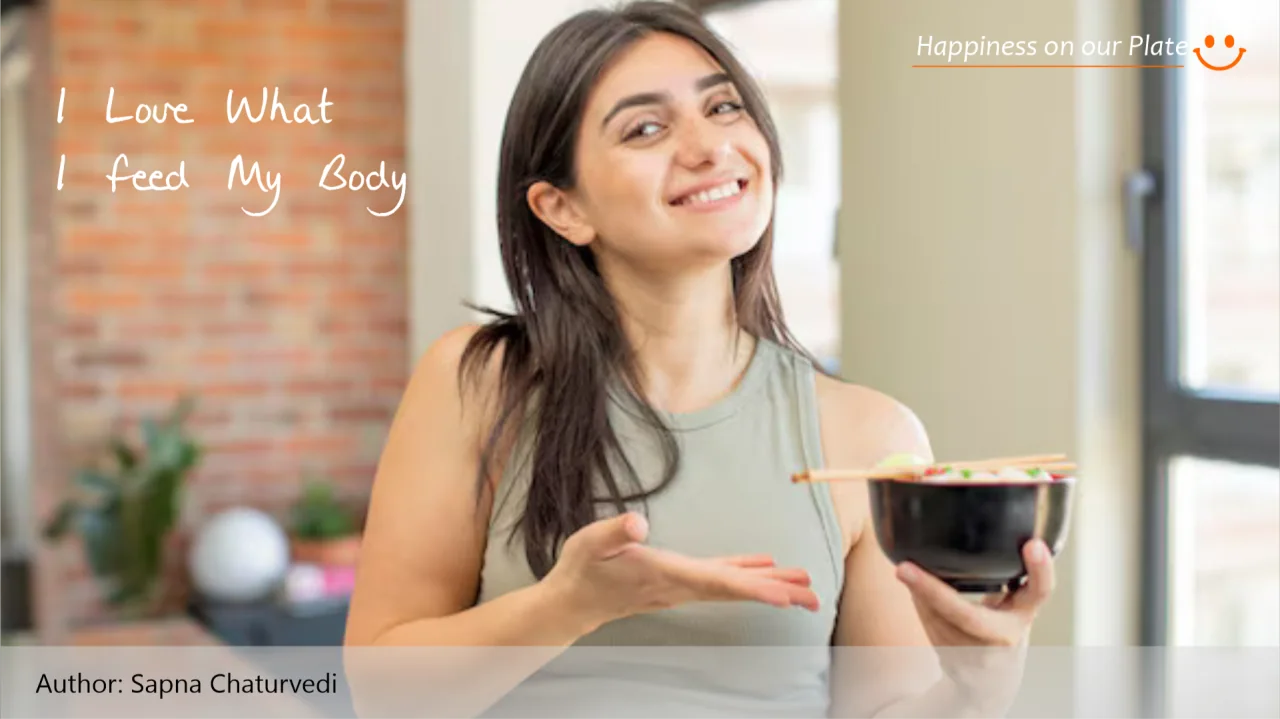
Most people can’t say that truthfully—not without hesitation, shame, or a mental scan of calories, macros, or guilt-inducing meals. Somewhere along the way, feeding ourselves stopped being a basic human need and became a performance review.
We now treat our bodies like projects to manage. We treat our plates like spreadsheets. And honestly, we treat our cars with more care than we treat the systems that keep us alive.
We fill them with premium fuel, follow maintenance schedules, and react instantly to warning lights. Our bodies? We run them on caffeine, skip meals like it's a badge of honor, and shame ourselves for being hungry.
This isn’t discipline. It’s dysfunction disguised as control.
We’ve been taught to approach food with fear, rules, and relentless optimization. Food has become a numbers game—grams, calories, ounces, timing—as if the goal is to eat as little and as “cleanly” as possible without breaking.
But here’s what we’ve forgotten: The purpose of food is not fuel. It’s care.
Fuel is a function. Nourishment is a relationship. Food is meant to nurture—not just sustain.
And yet we’ve reduced it to math. Basic, mechanical, and wildly overhyped math.
The truth is, nutrition isn’t sacred. It’s standard. Anything edible has nutrients. A salad has nutrients. So does a cookie. So does takeout.
We’ve turned nutrition into a rigid belief system when it’s really just a baseline—an average, designed by institutions like USDA and FSSAI to prevent malnutrition across populations. That’s it.
But we took those baselines and built a religion around them.
We memorized serving sizes more passionately than we studied for final exams. We obey food-tracking apps more loyally than we listen to our own hunger. And we praise ourselves for ignoring cravings—as if hunger were a moral failure rather than a biological signal.
We’ve made food the enemy. And in doing so, we’ve broken a connection that was never meant to be complicated.
The first thing a newborn does isn’t speak or walk—it’s turn toward nourishment. The rooting reflex ensures that infants instinctively seek the breast to feed. But this moment is not just about milk. It’s about bonding.
Research from the National Institutes of Health shows newborns can detect their mother’s scent within hours. Studies in Developmental Psychobiology confirm that infants prefer their own mother’s milk over any substitute, based solely on smell. Why? Because nourishment is emotional before it is nutritional.
Breastfeeding triggers the release of oxytocin—the hormone responsible for trust and bonding—in both infant and mother.
That moment teaches us something before we have language:
To be fed is to be loved.
To be held while eating is to be safe.
That’s the origin story of our relationship with food.
And now? We’re adults who eat alone, on screens, with rules and restrictions and guilt. We skip meals, silence our hunger, punish our cravings, and call it “health.”
A 2024 study in the Journal of Nutritional Psychology found that 67% of adults associate food more with guilt than with joy. That’s not just unfortunate—it’s unnatural.
Food is meant to build trust between us and our bodies. But instead, we've built a system of judgment, fear, and compliance. And we wonder why we feel so disconnected—even when we're following all the "right" guidelines.
Here’s the truth: there is no perfect diet. No universal answer Every body has different needs, histories, preferences, and patterns. There’s no calculator for care.
So maybe it’s time to stop asking, “Is this clean?” or “Will this ruin my macros?” and start asking:
“Does this feed me like I matter?”
Because feeding yourself well isn’t about perfect balance or flawless willpower. It’s about eating enough. Eating regularly. Eating without punishment.
Sometimes it’s home-cooked. Sometimes it’s store-bought. Sometimes it’s just what you need to feel human again.
It’s not about getting it right every time. It’s about remembering what food is actually for. Food was never just fuel. It was love. It was trust. It was safety. And it still can be.
We are not just what we eat. We are how we eat, why we eat, when we eat, and how we feel about it when we do.
And it’s time we started feeding ourselves like we’re worth feeding.