
Dal, Chawal, Roti, Sabzi, and Mom's Love: The Balanced Diet We Forgot
Once upon a time, our idea of a balanced meal was embarrassingly simple. Dal. Chawal. Roti. Sabzi. A spoon of homemade pickle on the side. And — the secret ingredient no nutrition label can measure — mom’s love.
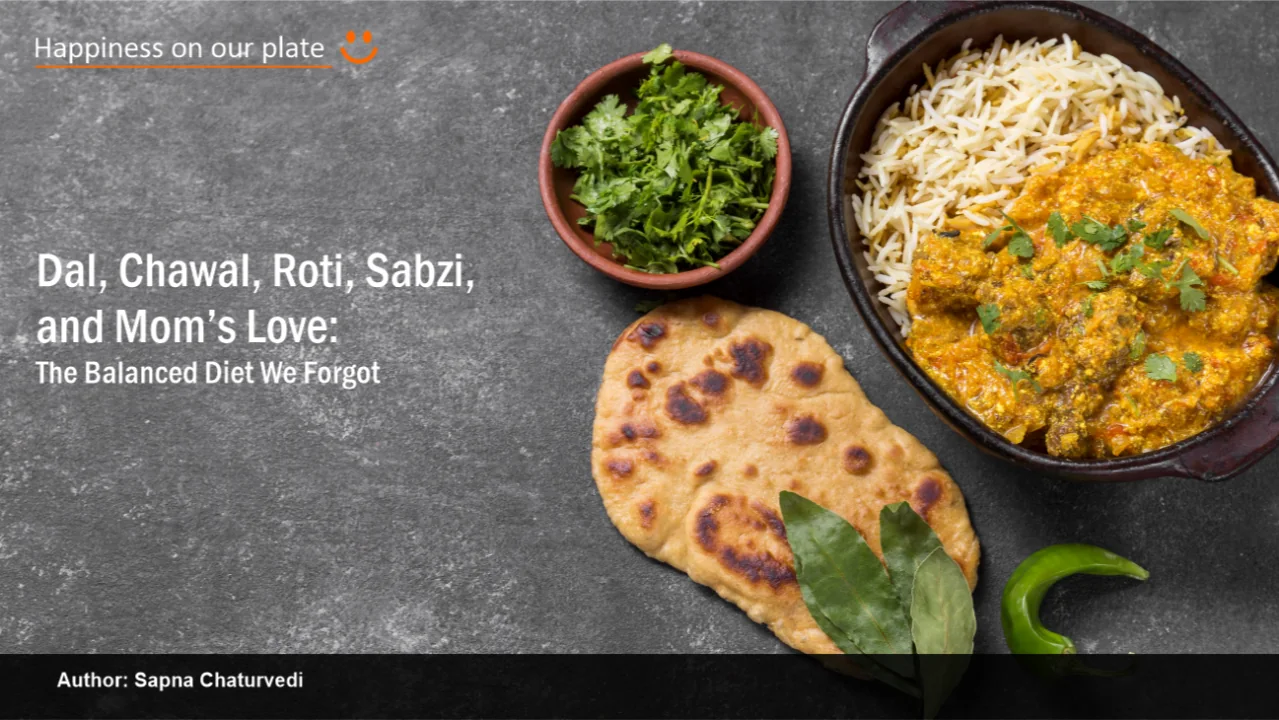
Once upon a time, our idea of a balanced meal was embarrassingly simple. Dal. Chawal. Roti. Sabzi. A spoon of homemade pickle on the side. And — the secret ingredient no nutrition label can measure — mom’s love.
We didn’t weigh our food. We didn’t scan barcodes. We didn’t Google “how many grams of protein in moong dal.” We ate until we were full, we sat together, and we went back to living. And somehow — without “diet plans” or “superfoods” — we stayed healthy.
Now? The same people who grew up on that plate are skipping carbs like they’re poison, chugging protein shakes, and eating out of plastic bowls while scrolling through “healthy recipes” on Instagram.
Let’s talk about what we threw away — and what the numbers say about the cost.
The Science That Was Already on Our Plate
Dal, chawal, roti, sabzi. Sounds basic, right? But here’s the breakdown:
Dal: Protein, fibre, iron, B vitamins.
Chawal (Rice): Energy from slow-digesting carbs, easy on digestion.
Roti (Whole Wheat): More fibre, minerals, and steady glucose release.
Sabzi (Vegetables): Micronutrients, antioxidants, plant compounds that keep your cells young.
Ayurveda would call this plate sattvic — balanced, nourishing, calming to both mind and body. Modern nutritionists would call it a perfect macro mix: carbs for fuel, protein for repair, fats (from ghee) for hormones and brain health, and plenty of fibre for digestion.
The Numbers We Can’t Ignore
Back when this was the standard Indian plate, lifestyle diseases were rare.
In 1972, diabetes prevalence in urban India was just ~2.1%. In 2021, it’s 11.4% nationwide — and over 16% in cities. (ICMR-INDIAB)
In 2005, only 12% of Indian adults were overweight. By 2021, it’s 24% — double in just 15 years. (NFHS-3 vs NFHS-5)
High blood pressure now affects 25% of Indian men and 21% of women — a silent epidemic that barely existed in rural India a few decades ago. (NFHS-5)
The same decades that saw these numbers rise also saw a sharp drop in home cooking, a rise in refined oils, and the explosion of processed food and delivery apps.
The Love Ingredient We Can’t Buy Back
When mom cooked, it wasn’t just about feeding you. It was about watching your face light up when your favourite sabzi appeared. It was making sure you got extra ghee if you looked tired. It was remembering you didn’t like too many onions in your dal.
You can’t DoorDash that. You can’t buy it from a “healthy meal subscription.” No chef — no matter how skilled — will ever stir in the care your mother did. And that care is part of why food made at home always sat better in your stomach than food from outside.
How We Broke Something That Worked
We decided “modern” meant complicated. We replaced mom’s thali with:
Protein shakes at breakfast.
Salad bowls with imported quinoa.
Energy bars with ingredient lists you need a chemistry degree to read.
“Guilt-free” snacks that are just ultra-processed junk in healthier packaging.
We traded balance for obsession — obsessing over macros, calories, and diets that weren’t even designed for our climate, cuisine, or culture.
The Carbs Myth That Ruined Dinner
Let’s clear this up: carbs are not the enemy. Your brain alone burns about 120g of glucose a day just to keep you functional. Dal-chawal or roti-sabzi gives you steady energy, not the crashes you get from sugary snacks.
The problem was never the rice or the wheat — it was when we stopped eating them as part of a balanced plate and started pairing them with fried junk, processed oils, and zero vegetables.
Why Simple Still Works
Kerala — one of the few states where home-cooked, plant-heavy meals still dominate — also has the highest life expectancy in India at 74.9 years. (SRS Statistical Report 2020)
A 2017 Public Health Nutrition study found Indians who cook at home regularly consume less sugar, saturated fat, and sodium — and have lower BMI — compared to those who rely on outside food.
Our grandparents didn’t have healthcare plans. They had kitchen plans. And they worked.
The Gentle Wake-Up Call
If you’re living on takeout, skipping meals, or hopping from keto to gluten-free without understanding your own needs — you’re not modern, you’re lost. And you’re throwing away a cultural superpower that costs almost nothing to keep.
So here’s your challenge:
Cook at least one meal a day — start with dal, chawal, roti, sabzi.
Eat it at a table, not in front of a screen.
Share it with someone — because meals are healthier when they’re communal.
Your Takeaway
The balanced diet you’re looking for is not in a powder, packet, or imported grain. It’s in the simple thali you grew up with — and in the love that went into making it.
You don’t need to “discover” the perfect diet. You just need to remember it.
Because the day you stop treating dal, chawal, roti, sabzi as “just basic food” and start treating it like the health insurance it is — that’s the day you’ll start eating like you actually care about your future.