
How Identity Is Formed — and Why It Shapes What We Eat
Every human being is born with a unique internal rhythm — an emotional blueprint, a distinct set of values, and a natural compass for navigating the world. But from the moment we arrive, we are placed into systems that behave as if one size should fit all.
Every human being is born with a unique internal rhythm — an emotional blueprint, a distinct set of values, and a natural compass for navigating the world. But from the moment we arrive, we are placed into systems that behave as if one size should fit all.
Rather than being encouraged to explore, we are taught to follow. Instead of being supported in self-understanding, we are trained to obey. Emotions are filtered before they’re even expressed. Opinions are dismissed before they’re even formed. As children, we’re told we don’t know enough. As teenagers, we’re told we feel too much. And as adults, we’re expected to function — without ever being shown how to feel, reflect, or choose.
This isn’t a personal failure. It’s a systemic pattern.
🔁 The Chain: Conditioning → Habit → Pattern → Identity
Conditioning starts early. It shapes our beliefs about what is acceptable, shameful, or “normal.” Those beliefs influence our behaviors. Repetition turns behaviors into habits. Habits cluster into patterns. Patterns create predictability. And predictability — not truth — becomes identity.
But this version of identity isn’t chosen. It’s inherited. It’s reinforced by our environment and protected by the nervous system, which favors what feels familiar, not what feels authentic. The comfort zone becomes the boundary of self — not because it reflects who we are, but because it keeps us safe.
We’re raised to believe that wisdom lives outside us. That education will tell us who we are. That adults know best. And while we’re not taught to manage our emotional worlds, we’re held accountable the moment they overflow.
The result? A generation of people disconnected from themselves — not because they lack insight, but because they were never given permission or tools to explore their own blueprint. They were shaped by repetition, not reflection. By approval, not authenticity.
We often talk about identity as something "inner" — something waiting to be discovered. But identity is built externally first. The mirror matters. We are shaped by what is reflected back: through language, tone, behavior, and repetition. That reflection becomes habit. Habit becomes pattern. Pattern becomes identity.
This is not about blame. It’s about clarity. Because until we understand how we were shaped, we’ll keep mistaking the shape for the self.
🍽 How These Same Forces Shape Food Choices
We love to believe that food choices are personal. But they’re not. At least, not entirely. They are the result of the same internal and external forces that shape everything else — and most of them operate beneath awareness.
🔹 Internal influences:
Early exposure, emotional memories, sensory associations, and nervous system responses. The foods we ate as children — and the emotional tone surrounding them — create neural maps of comfort, safety, or stress. For example, if “treat” meant processed sugar or fast food, the craving for emotional relief will instinctively point there. It’s not about willpower. It’s about wiring.
🔹 External influences:
Cultural norms, media, marketing, peer behavior, and social platforms. These define what is acceptable, aspirational, or shameful. Advertising often targets emotional triggers — linking food with identity, belonging, reward, or status. Social media amplifies it, turning food into content, performance, or morality. All of this enters the body before we even taste a bite.
These forces work together. They don’t just shape what we eat — they shape how we feel about eating. When decisions are driven by habit, emotion, or unconscious suggestion, they feel automatic — even when they contradict our conscious goals.
This doesn’t mean food choices are fixed. But it does mean they’re patterned. And like any pattern, the first step to shifting them is not control — it’s awareness.
✨ Closing Insight
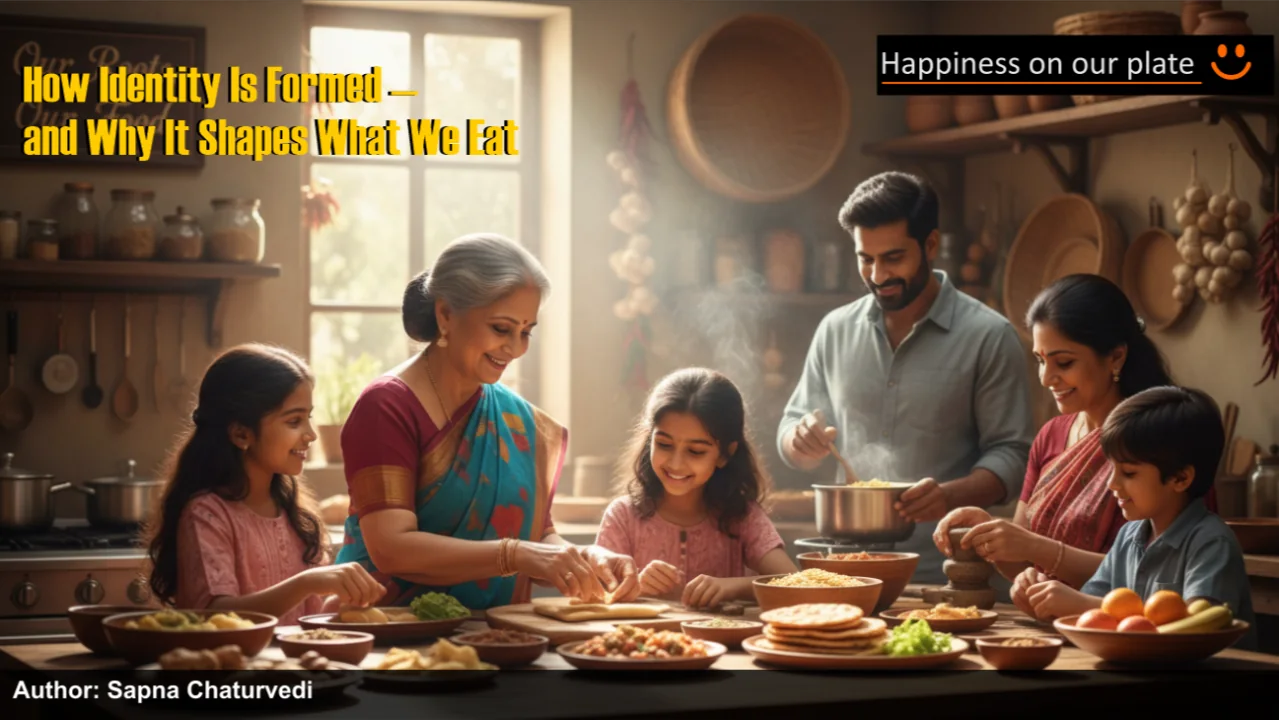
If identity is shaped by what we repeat, and food choices are one of the most repeated actions in our lives, then what we eat isn’t just about fuel — it’s about who we’ve become.
But here’s the good news: If identity is learned, it can also be unlearned. If food behavior is patterned, it can be repatterned.
Not by force. Not through shame. But by seeing clearly — and choosing again.
Because what we practice, we become. And what we become... we can always revisit.