
Nutrition Myths Busted: The Lies We’ve Swallowed, and the Truth We Deserve
In a world where kale has a PR agent and protein has become religion, one thing remains clear: we are not eating from truth—we’re eating from fear.
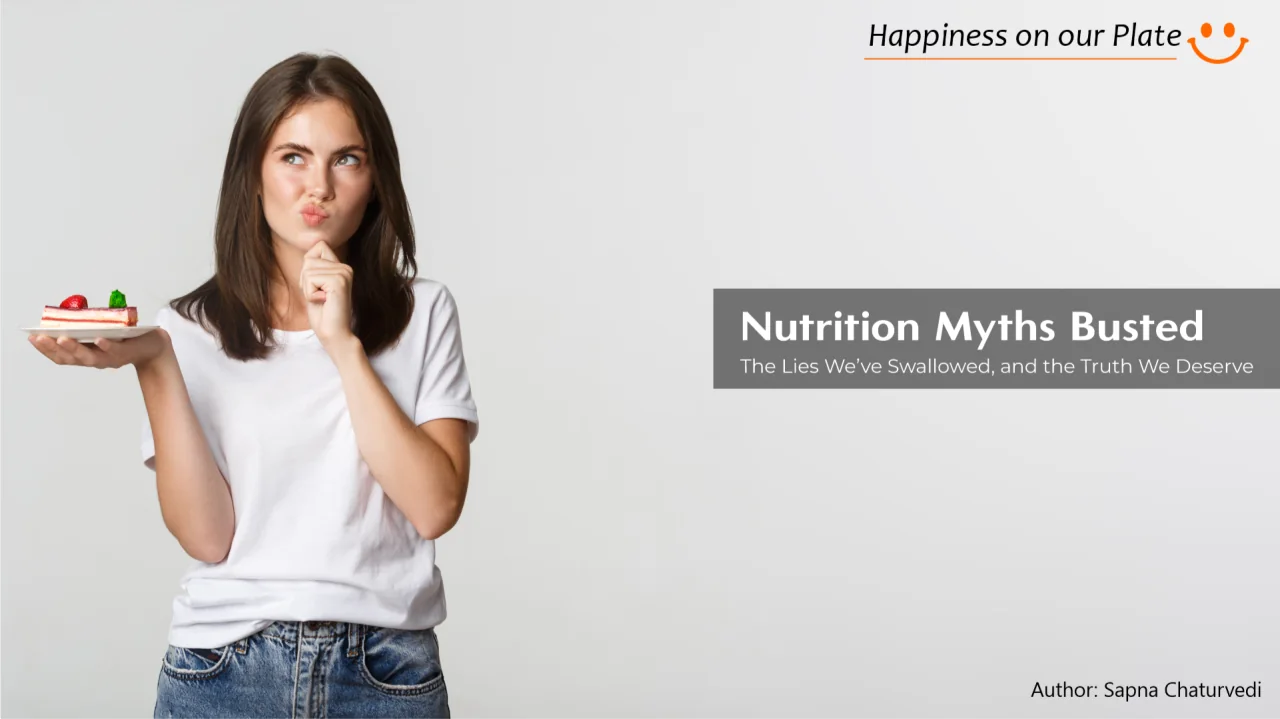
In a world where kale has a PR agent and protein has become religion, one thing remains clear: we are not eating from truth—we’re eating from fear.
Nutrition today is not about nourishment. It’s about narratives. Myths, misinformation, and market-driven agendas have hijacked our most primal relationship—the one with food. From fear of carbs to worship of protein, from juice cleanses to gluten hysteria, the modern eater is more confused than ever. Let’s dismantle the dogma.
MYTH 1: More Protein Means More Muscle (and Better Health)
Protein has become the poster child of modern diets. From gyms to grocery stores, we’re sold the idea that more is always better. But excess protein doesn’t build more muscle—especially in the absence of resistance training. It builds confusion, bloating, and eventually, health risks.
High protein intake can strain the kidneys, increase calcium excretion, and crowd out fiber and essential nutrients. Too much animal protein, especially from processed meat, is linked to increased cardiovascular risk, inflammation, and even certain cancers. You don’t need 150 grams of protein a day to be healthy. You need balance, fiber, movement, and sleep. Period.
MYTH 2: Carbs Are the Enemy
Somewhere along the way, we confused cupcakes with quinoa. Carbohydrates became the villain—blamed for weight gain, fatigue, and every modern ailment. But carbs aren’t the enemy. Refined carbs are.
Whole carbs—like brown rice, sweet potatoes, oats, legumes, fruits—are essential for brain function, hormone production, and mood regulation. The real danger isn’t the banana you had at breakfast. It’s the ultra-processed garbage wrapped in plastic, disguised as “low-carb” while loaded with emulsifiers and sweeteners.
MYTH 3: Fat Makes You Fat
Fat is not the problem. Fear of fat is. For decades, we were sold low-fat everything. What replaced it? Sugar, additives, and chronic inflammation.
Healthy fats—olive oil, nuts, seeds, avocados—are vital for hormone balance, skin health, and brain function. The real issue is trans fats and over-processed vegetable oils—the stuff that sneaks into packaged snacks and fast food. Ditch the myths. Keep the fats. Just choose wisely.
MYTH 4: Supplements Can Replace Real Food
No pill, powder, or capsule will ever replicate the complexity of real food. Supplements have a role—but they are gap fillers, not meal replacements. Most people popping multivitamins don’t have deficiencies. They have marketing fatigue.
Your body knows how to extract nutrients from food. It doesn’t speak “isolate.” What it craves is fiber, enzymes, minerals, and synergy—things no supplement can recreate. The secret isn’t in your pill box. It’s in your plate.
MYTH 5: Juice Cleanses Detox the Body
This might be the biggest scam in wellness. Your liver and kidneys detox your body every second of every day. No juice cleanse, powder, or alkaline water does that job better.
In fact, most juice cleanses strip the body of fiber, spike blood sugar, and leave you hungry, moody, and nutritionally deprived. If anything, they detox your wallet. Want to support detox? Eat real food. Drink water. Sleep. Poop. Repeat.
MYTH 6: “Natural” Means Healthy
Newsflash: cyanide is natural. So are mercury and lead. “Natural” is one of the most manipulated and meaningless labels in food marketing.
Most “natural” products on shelves today are loaded with preservatives, refined sugars, and artificial flavors. The food industry knows the word makes us feel safe, so they use it as a smokescreen. Read ingredients—not labels. Your gut deserves better than a buzzword.
MYTH 7: If It’s Available, It Must Be Good
Availability is not proof of quality—it’s proof of profitability. Most supermarket shelves are lined with products engineered to hijack your brain, not nourish your body.
These items are designed by food scientists to create the “bliss point”—a perfect storm of sugar, salt, and fat that overrides satiety signals and fuels addiction. What’s legal, available, and convenient isn’t always safe. Or necessary.
The Truth? We’ve Been Conditioned, Not Educated
You’re not undisciplined. You’re not broken. You’ve been marketed to, overfed, undernourished, and confused. But awareness is power. And now, you know better.
So let’s eat from clarity—not confusion. Let’s nourish—not just consume.
Because the real detox isn’t in a bottle. It’s in the moment you decide to reclaim your plate.