
Happy Food, Healthy Mood — And Why We've Been Getting It Backwards
We’ve all heard the mantra: “Eat healthy, feel happy.” But if you look around, most of the people eating “healthy” don’t look happy at all. They look stressed. Obsessed. Constantly chasing the next perfect meal, only to feel bloated, foggy, or anxious after all that effort. They're not thriving. They’re managing — calories, macros, shame.
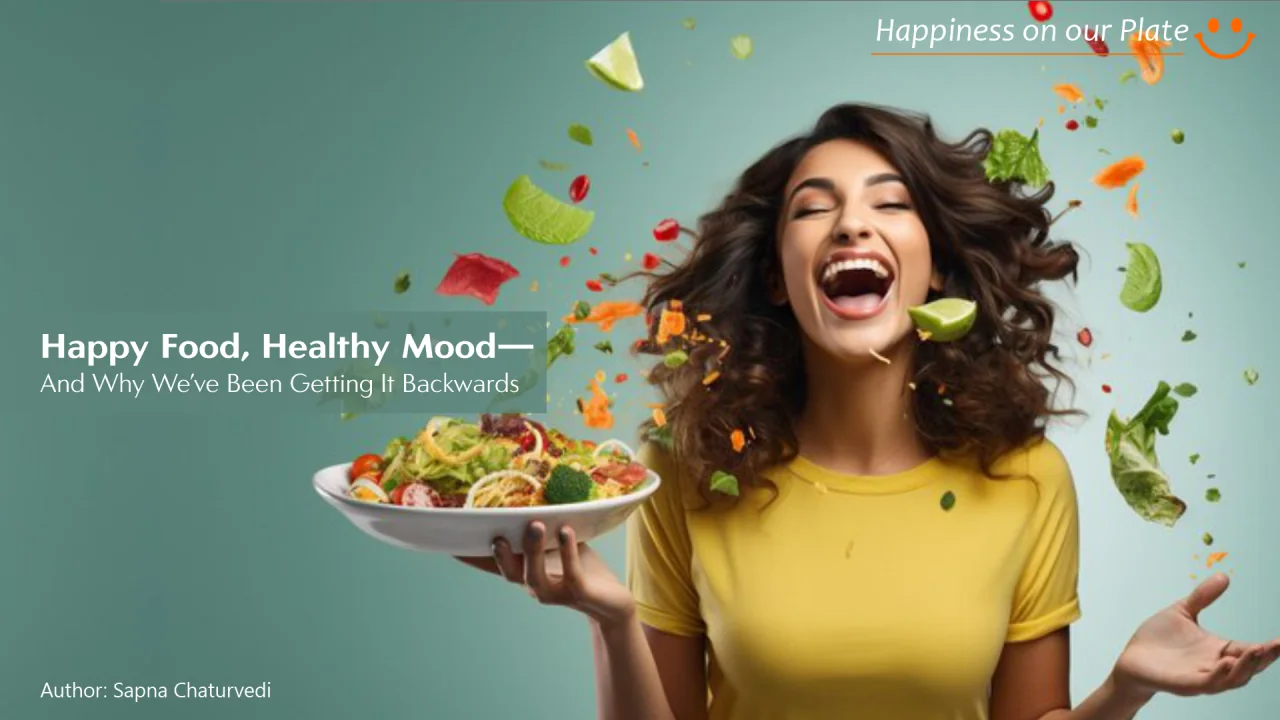
We’ve all heard the mantra: “Eat healthy, feel happy.” But if you look around, most of the people eating “healthy” don’t look happy at all. They look stressed. Obsessed. Constantly chasing the next perfect meal, only to feel bloated, foggy, or anxious after all that effort. They're not thriving. They’re managing — calories, macros, shame.
Because here’s what no one says out loud: healthy food, without a happy relationship to it, is just another form of control.
The problem isn’t our food. It’s our mindset. We’ve been taught to treat meals as projects, and our bodies as problems. Is it clean enough? Organic enough? Instagrammable enough? We’ve moralized food into categories of “good” and “bad,” stripped it of joy, and turned every plate into a test of self-worth. The result? A generation that’s not nourished — just terrified of doing it wrong.
Your Body Is Listening — Not Just to What You Eat, But How
It’s not just what’s on your plate that matters. It’s the state you’re in when you eat it.
Research from Harvard Medical School and the Journal of Psychosomatic Research confirms what your nervous system already knows: food consumed under stress doesn’t digest well. When you eat in a state of guilt, judgment, or internal chaos, your body enters a mild fight-or-flight response. Digestion slows. Nutrient absorption drops. Inflammation rises. The “perfect” salad eaten in self-loathing will treat your body worse than pizza eaten in peace.
Digestion doesn't respond to discipline. It responds to safety.
The Wellness Industry Doesn’t Want You to Trust Yourself
Let’s stop pretending this is an accident. There’s an entire industry that profits off your self-doubt. It convinces you you're toxic, inflamed, bloated, addicted — and then sells you the cure: another plan, protocol, powder, or detox. But none of it is designed to empower you. It’s designed to make you dependent.
And it works, because we’ve been trained to fear our own instincts. Hunger is framed as weakness. Cravings are red flags. Fullness feels like failure. We count, restrict, overthink — and then blame ourselves when the cycle breaks us.
But what if the solution isn’t more control?
What if real wellness starts with one radical shift: trusting your body instead of constantly policing it?
“Happy Food” Isn’t Junk. It’s Intelligence.
Let’s be clear: this isn’t an argument for mindless indulgence. “Happy food” isn’t code for junk food. It’s about food that brings peace to your nervous system and pleasure to your senses. Food eaten without fear. Food that feels good not just nutritionally — but emotionally, energetically, digestively.
That might look like broth when you're sick. A fresh mango in summer. A bowl of dal and rice that reminds you of home. Or yes, a piece of chocolate on a stressful day — not as a reward, but as relief.
Happy food doesn’t mean “anything goes.” It means you learn what your body actually responds to, not what some influencer says should work. And it means you eat it with presence — not punishment.
Because when food becomes a relationship, not a performance, your body starts responding like it’s safe to be alive again.
Healing Doesn’t Happen Under Surveillance
Let’s burn the illusion that micromanaging every meal is a sign of discipline. It’s not. It’s often fear in disguise. And fear doesn’t heal — it fatigues. The more you track, judge, and punish yourself at the table, the more your body stays in a state of chronic vigilance. That’s not wellness. That’s quiet, socially sanctioned suffering.
So here’s the real question: Are you eating like someone who wants to live?
Not just survive on smoothies and macros. But actually live. Feel joy. Think clearly. Digest peacefully. Be present with your body — and grateful for it.
Because a person who eats in shame might be technically “healthy,” but internally, they’re at war. And war, no matter how well intentioned, always takes a toll.
It’s Time to Redefine Wellness
Wellness that costs you your joy isn’t wellness. It’s aesthetic discipline. It’s fear marketed as health. The real shift comes when you decide to stop performing for wellness culture — and start building a relationship with your own biology.
That means trusting hunger. Respecting satiety. Letting pleasure in. Learning what works for your body based on feedback — not fear. Letting food be simple again.
Because it can be.
Final Thought: Flip the Formula
We’ve had it backwards. It’s not healthy food leads to a happy mood. That formula assumes food alone can fix a mind that's at war with itself.
The truth is this:
Happy food — food eaten in safety, pleasure, and peace — creates a healthy mood.
And from that mood, real healing begins.
Not just in your gut.
In your life.