
Food and the Architecture of Daily Life
How daily rituals of eating sustain emotional balance
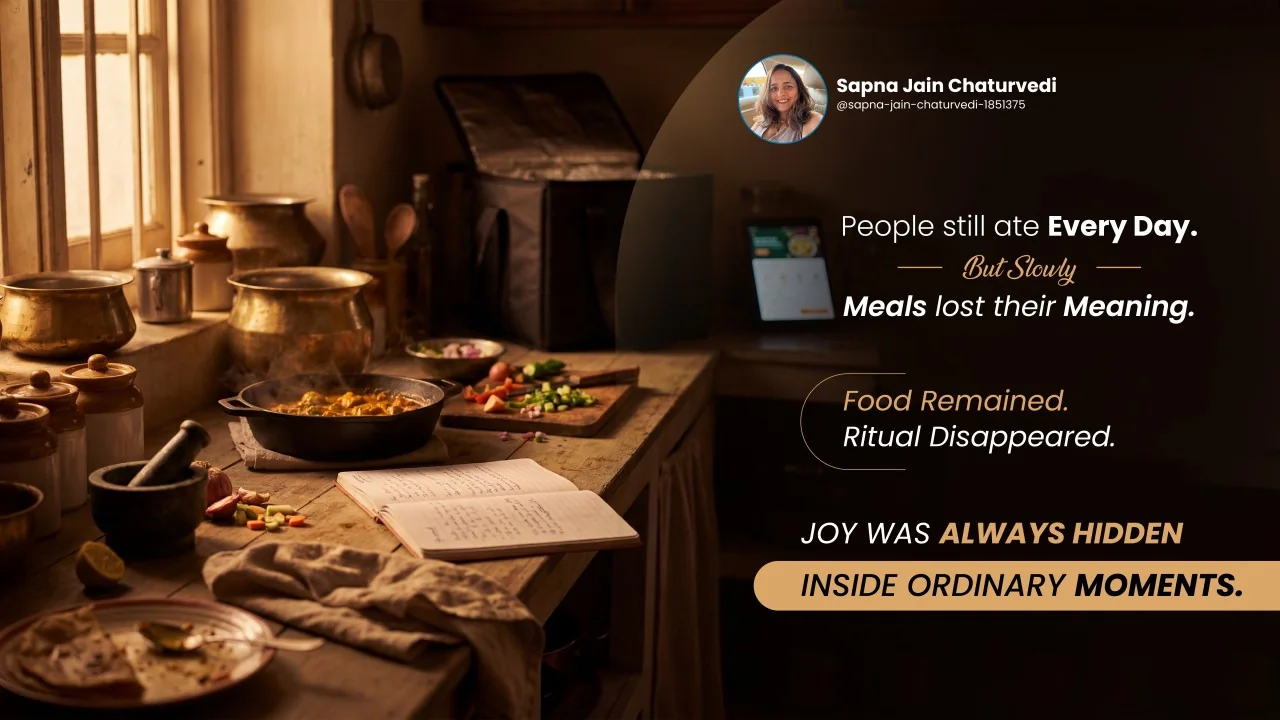
How daily rituals of eating sustain emotional balance
Food is often discussed in terms of nutrition, health, or culture. Yet its most immediate impact is emotional. Everyday meals create rhythm, provide comfort, and sustain joy in ways that are often overlooked. Emotional wellbeing is not only shaped by grand events or formal interventions. It is built in the ordinary rituals of eating, repeated daily until they become invisible but decisive.
The first layer is rhythm. Meals punctuate the day, creating predictable intervals of pause. Breakfast, lunch, and dinner are not only nutritional markers. They are temporal anchors. Psychologists note that routines reduce anxiety by providing structure. Eating at regular times stabilizes mood and creates continuity. Without rhythm, days blur. With rhythm, life feels ordered.
The second layer is comfort. Certain foods carry emotional associations that extend beyond taste. A bowl of soup on a cold evening, tea shared in conversation, or a dish linked to childhood memory provides reassurance. Neuroscience research shows that sensory experiences tied to memory activate emotional centers in the brain. Comfort food is not indulgence. It is emotional regulation.
The third layer is social presence. Meals create opportunities for interaction. Even casual eating with colleagues or friends sustains belonging. Studies on workplace culture reveal that employees who share meals report higher trust and collaboration. Families that eat together report stronger communication. Everyday joy is reinforced not only by what is eaten but by who is present.
The fourth layer is creativity. Cooking allows expression. Even simple improvisation, adjusting spices, combining ingredients, experimenting with new dishes, introduces play into routine. Creativity in the kitchen sustains joy by transforming necessity into participation. Anthropologists argue that food preparation is one of the most accessible forms of creativity, available to anyone regardless of skill.
Technology introduces tension. Convenience has expanded: delivery platforms, pre packaged meals, and AI driven recipe suggestions reduce effort. Yet convenience can also reduce joy. A meal consumed alone in front of a screen satisfies hunger but empties ritual. A 2025 survey on urban dining habits found that households relying heavily on delivery reported higher efficiency but lower satisfaction with mealtime experience. The paradox is clear: convenience rises, but joy declines.
The fifth layer is cultural continuity. Everyday meals preserve identity. Traditional dishes repeated across generations sustain belonging. Anthropologists note that food rituals are often the most resilient cultural practices, precisely because they are embedded in daily life. Joy is reinforced when meals connect individuals to lineage. Without continuity, eating becomes isolated consumption. With continuity, it becomes cultural memory.