
Food as Nurture: From Survival to Meaning
Food doesn’t just fill the stomach — it stabilizes emotion, anchors memory, and encodes safety. From the earliest days of life, feeding is not merely a biological act but a relational one. A baby is not just nourished when it is fed; it is soothed, regulated, and reassured. Oxytocin is released, heart rate calms, and the nervous system records a profound, wordless memory: I am safe. This association between food and emotional security doesn’t vanish with age. It stays, buried in the architecture of the nervous system, influencing how we eat, why we crave, and what feels like comfort.
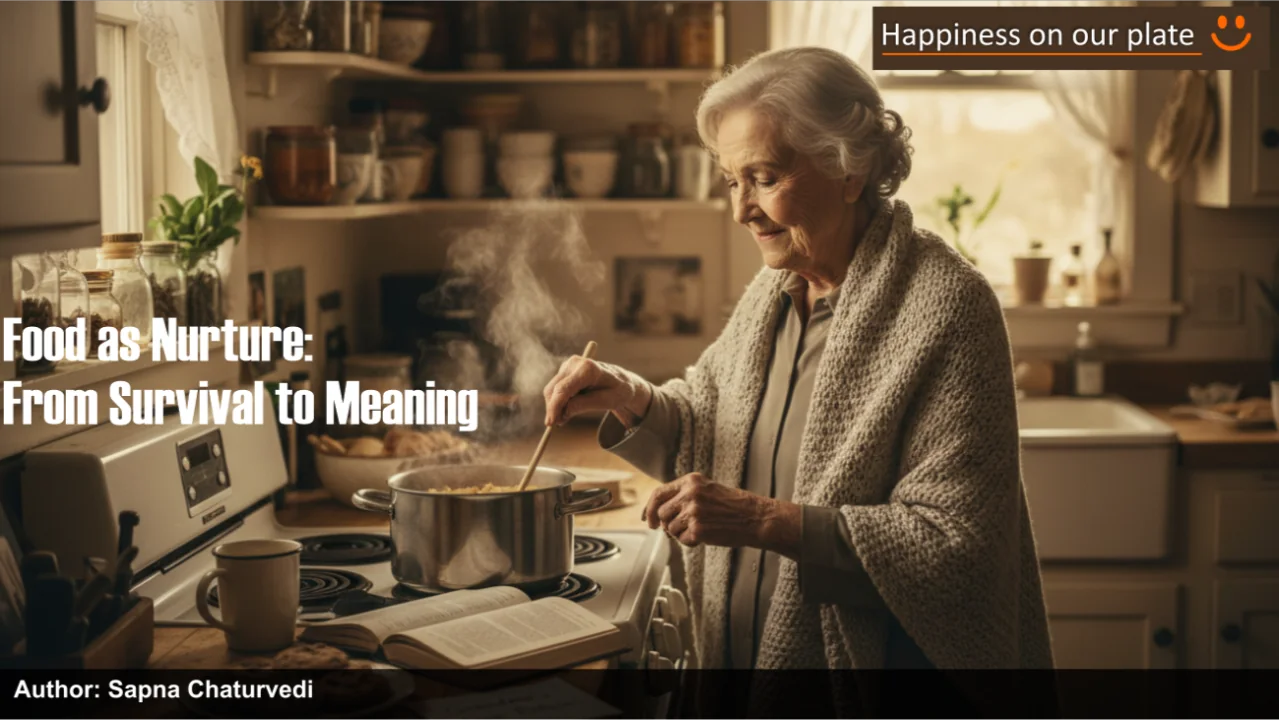
Food doesn’t just fill the stomach — it stabilizes emotion, anchors memory, and encodes safety. From the earliest days of life, feeding is not merely a biological act but a relational one. A baby is not just nourished when it is fed; it is soothed, regulated, and reassured. Oxytocin is released, heart rate calms, and the nervous system records a profound, wordless memory: I am safe. This association between food and emotional security doesn’t vanish with age. It stays, buried in the architecture of the nervous system, influencing how we eat, why we crave, and what feels like comfort.
Modern neuroscience confirms what our instincts have always known. Eating activates key areas in the brain — the hippocampus and amygdala — where memory and emotion converge. This is why certain meals, flavors, or even smells can unlock floods of feeling. A 2023 study in Nature Neuroscience found a direct correlation between flavor recognition and emotional memory, offering a biological explanation for why “comfort food” feels like more than nostalgia. It’s not just about the taste — it’s about returning, however briefly, to a remembered sense of care.
But nourishment isn’t just in the food. It’s in the rhythm that surrounds it. Psychologists have long emphasized the power of routine — and mealtime, in particular, is a powerful regulatory anchor. Preparing meals together, eating at consistent times, or simply sitting down in silence can lower cortisol, steady the breath, and foster relational resilience. The American Psychological Association (2024) found that families who eat together regularly report lower anxiety, improved emotional regulation, and deeper interpersonal trust. These rituals don’t just create connection — they train the nervous system to associate nourishment with presence, not pressure.
When food is rushed, eaten in isolation, or consumed in a state of stress, the body loses this regulating rhythm. Cortisol remains high, digestion slows, and emotional fatigue follows. But when food is approached with awareness, care, and calm, the parasympathetic system activates — supporting digestion, repair, and emotional recovery. In this way, food becomes more than fuel. It becomes a bridge between biology and emotion. It tells the body: you are safe here.
💪 From Healthy to Happy
Health, on its own, is not the end goal. It is the foundation — the scaffolding that allows us to build lives of meaning. Strength, vitality, and balance matter, but they are only as valuable as what they support. Without joy, health is maintenance. With joy, health becomes liberation.
Because happiness gives health its purpose. And happiness is not just the absence of illness or the presence of a strong, well-regulated body. It is something deeper — lived, not measured; felt, not optimized. We can follow every rule, track every macro, and build discipline like a fortress, and still feel disconnected. Wellness alone cannot fill us. What fuels life is not performance, but meaning — the moments that ignite something within us, the relationships that soften our edges, the pursuits that make time feel sacred.
A strong body without a strong spirit is an empty frame. What gives the body its weight is emotion, memory, and movement. And this movement is not just physical — it is the emotional energy that animates our lives. Studies in positive psychology (Harvard, 2022) show that happiness correlates far more with emotional rhythm, relationships, and a sense of purpose than with fitness metrics or dietary perfection. We were never meant to eat or live by checklists. We were meant to feel alive.
✨ Closing Insight
To reclaim food as nurture is to remember that biology and emotion are not separate systems. To reclaim health as foundation is to remember that strength without joy is survival, not living. And to move from healthy to happy is the true revolution — one that asks us to bring awareness to the smallest rituals, to feed not just the body but the being within it.
Because the body does not simply want to function. It wants to feel. And feeling — when met with clarity, rhythm, and care — is what transforms survival into meaning.