
The Emotional Side of Cooking
How food sustains connection, memory, and belonging
How food sustains connection, memory, and belonging
Food is emotional infrastructure. It is one of the few rituals that combines care, participation, memory, and presence within a single act. Cooking is not only about sustenance. It is about sustaining bonds. The kitchen is where emotional health is reinforced daily, quietly, without ceremony. Meals are the architecture of belonging, repeated until they become invisible, yet decisive in shaping how people feel connected to one another.
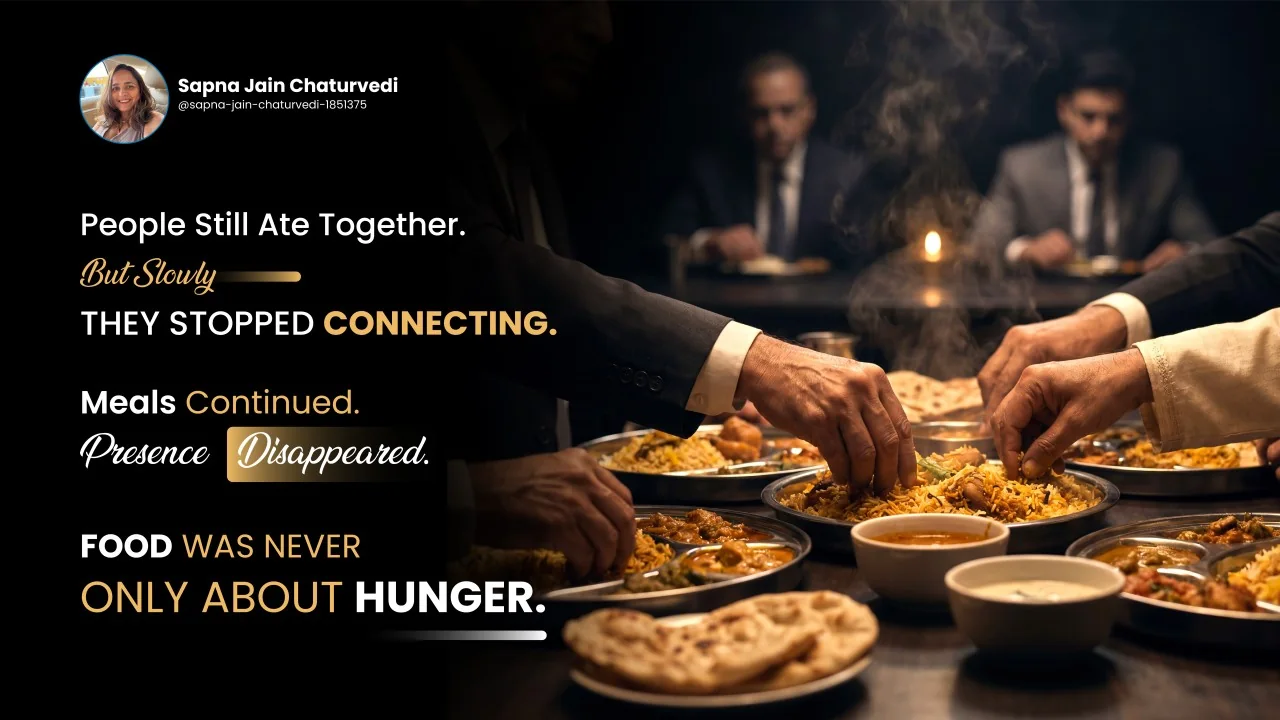
When meals become transactional, something essential is lost. A plate delivered to a desk fills hunger but empties ritual. A family eating separately loses rhythm. A community that stops gathering around food loses continuity. The erosion is subtle: people eat, but they do not connect. Over time, the absence of shared meals weakens trust and belonging. The decline is not dramatic, but it is steady, and its effects accumulate until people drift into isolation even while surrounded by others.
Evidence confirms this erosion. Research from Columbia University found that families who eat together at least five times a week report higher resilience and lower rates of adolescent stress. A Harvard study on workplace culture showed that teams who share meals demonstrate stronger collaboration and trust. The World Health Organization has identified loneliness as a growing public health issue, with shared rituals like meals cited as protective factors. These findings are not sentimental. They reveal food as structural support for emotional wellbeing, a daily practice that sustains resilience.
Cooking is also participation. It transforms raw ingredients into shared experience. It allows creativity to enter daily life. A child learning a recipe preserves lineage. Friends improvising a meal preserve presence. Colleagues cooking together preserve trust. Participation matters because it turns food from consumption into creation. Without it, meals become passive. With it, they become memory. The act of cooking is not only about producing food. It is about producing connection.
Technology introduces pressure. It reduces the labor of cooking, but it can also reduce participation. As meals become optimized for efficiency, the social function of preparation begins to disappear. Recipe apps and delivery platforms expand access, yet they risk narrowing experience. A meal ordered in seconds satisfies hunger but removes the shared labor that builds memory. The question is not whether technology belongs in the kitchen. It is whether it serves connection or erodes it. Convenience can displace ritual, and efficiency can displace care.
Food traditions extend beyond emotional wellbeing. They preserve continuity. They create repeated rituals through which communities recognize themselves over time. A recipe carried across generations is more than cuisine. It is identity sustained through repetition. Anthropologists note that food traditions are often the last cultural practices to disappear in migrant communities, precisely because they anchor continuity. When traditions fade, continuity weakens. When recipes are lost, cultural memory thins. Food is not only nourishment. It is cultural storytelling, a way for communities to remember themselves.