The lunch bell rings, and somewhere in a classroom that smells of chalk and 40 children, a steel dabba opens only halfway.
You remember the move, even if you’ve never named it. Thumb on the lid, tilted just enough to get a hand in, angled away from the bench beside you. A quick glance left, then right. Then eating — fast, folded over the desk, roti torn under the lid like contraband.
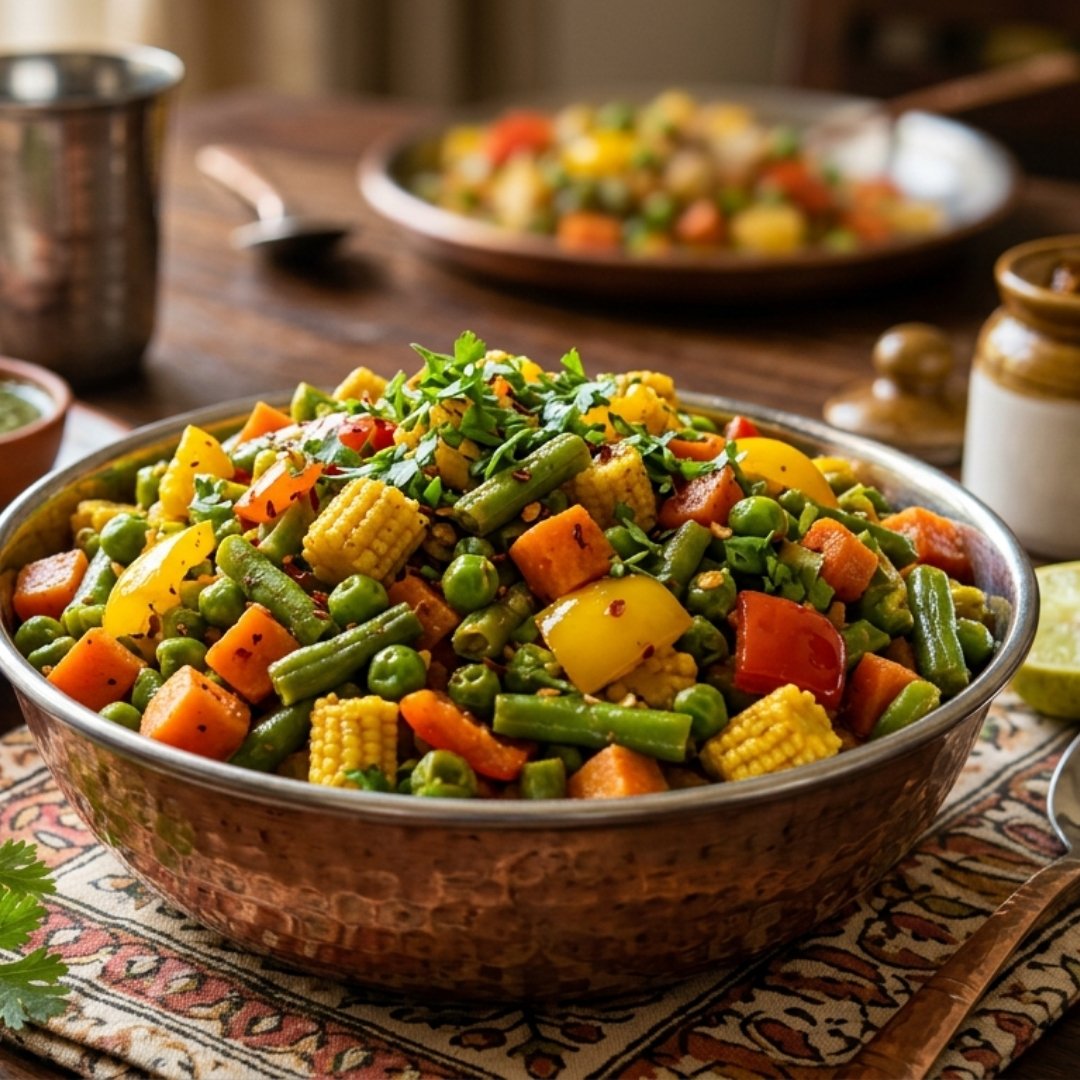
Inside was nothing scandalous. Sukhi sabzi. Aloo gone golden at the edges, or bhindi, or gobhi, still warm enough at noon to send up that unmistakable smell of haldi and hing the moment the lid cracked. That smell was the problem. It travelled. It announced. And two benches away, someone with a sandwich — white bread, geometry-perfect triangles — wrinkled a nose and asked the question that decided things for years: "What IS that?".
So the lid stayed half-closed. Not because the food was bad. Because the food was loud, and yellow, and smelled like a home, and at that age nothing is more dangerous than smelling different from everyone else.
Now hold that child in your mind, and jump.
Same person, years later, different city. Evening. A queue on a footpath, twenty people deep, outside a small restaurant whose hand-painted board makes exactly one promise: ghar jaisa khana. Home-like food. The person waits forty minutes, pays real money, and is served a steel plate holding — almost to the grain of haldi — the same thing they once ate with the lid half-shut and one eye on the room.
Nobody in that queue is embarrassed. People have driven across town for this. Someone photographs the thali before touching it.
Somewhere between the classroom and the footpath, the food never changed. Only the audience did.
It’s worth standing in the kitchen where that dabba began. Someone was up before the house was — the kadhai already warm, oil shimmering, and then that first pinch of hing hitting it. The old texts had a name for what hing does; the Bhavaprakasha calls it the resin that dispels heaviness and moves what is stuck, which is a rather generous description of something that smells, at seven in the morning, like a decision has been made on your behalf. Then haldi, which the same tradition calls the golden root of purification — the colour that would, hours later, betray the dabba to the whole class. Jeera crackling. The vegetables going in with that hiss that is the true start of an Indian day.
An everyday dry sabzi looks simple, and that is its finest trick. Behind that plain plate can sit over twenty spices, most of them present in whispers — a pinch of jaiphal, a breath of tej patta, elaichi, dalchini, lavang, each too small to name in a bite and impossible to remove without the whole thing going quiet. The largest voice among them is usually the humblest: sendha namak, the pink rock salt of fasting traditions, long considered gentle on digestion. And there is amchoor — the sourness of the unripe mango, which the classical texts prized precisely as the sourness that wakes up taste and lifts a heavy dish. That faint tang at the edge of your mother’s bhindi? That was scripture, working quietly.
Here is a small, satisfying truth from the numbers. In one such spice blend, the quantity of salt in the recipe predicts about 16,950 mg of sodium per 100 grams of the mix; the laboratory, measuring independently, found 16,731. Two separate roads, arriving within about one percent of each other. A pinch of masala scattered across a whole kadhai of vegetables — but a recipe that keeps its own promises. The dabba was always honest. It was the classroom that wasn’t.
Because think about where the shame came from. Not from the food. From a nose wrinkled two benches away. From the quiet arithmetic every child does about which lunches earn admiration and which earn questions. From advertisements where happy children ate things that came in wrappers, never things that came wrapped in a warm roti. The voice that said hide it was never your voice. You borrowed it, the way children borrow everything, and you carried it long after its owner forgot they’d ever lent it.
And all that time, someone kept packing the dabba anyway. Kept getting up early. Kept adding the extra ghee to the roti because you once, years ago, said you liked it that way. There is a whole language of affection in a packed lunch that a child is too busy surviving to read.
"Taste is the only sense that crosses the threshold. You do not just sense it — you absorb it. The outside becomes the inside." Which may be why, decades later, one whiff of hing meeting hot oil in a stranger’s kitchen can put you back at that desk — lid, glance, hunger, all of it — before your mind has any say in the matter.
The dabba you once hid is the food the world now stands in line for — you were never ashamed of that sabzi; you loved it so much you couldn’t bear to have it laughed at.
So let it out of hiding properly. Not as nostalgia, not on special order at a restaurant with the right board outside. On a Tuesday. In your own kitchen, lid all the way open, the smell allowed to fill the whole house the way it always wanted to. The everyday sabzi is the one dish that never asked for an occasion — it is the occasion, arriving daily, wearing ordinary clothes.
And the hands that packed those dabbas at dawn will not be packing them forever. Kya pata kal ho na ho.
Share this with anyone who ever ate lunch with the lid half-closed — and now, in some queue in some city, misses exactly that food, the taste every Indian kitchen once made without apology. Then cook it together, and let it be loud.
Happiness is health.