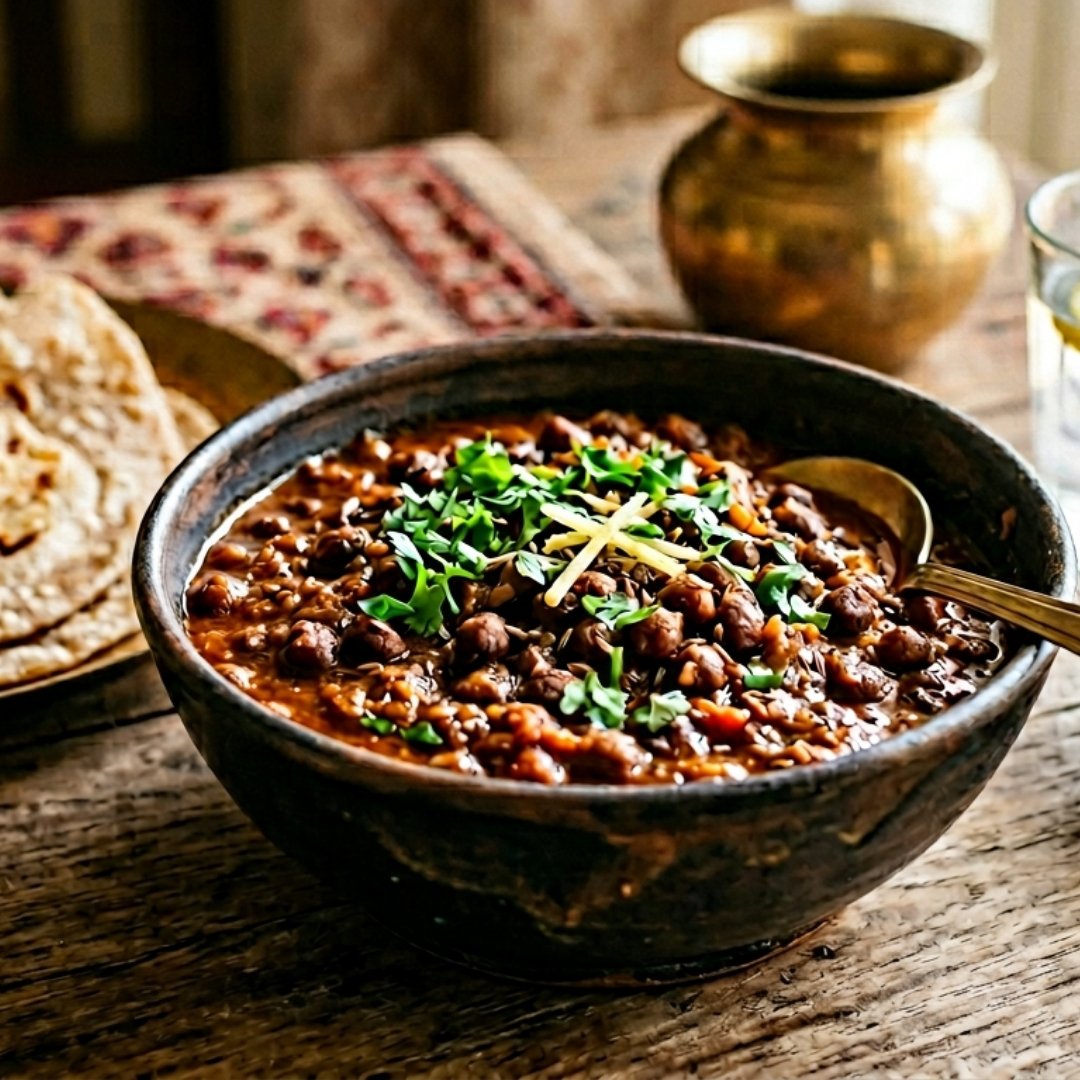
7 a.m., and the gym smells of rubber and effort. Between sets, a young man opens his steel dabba, and the smell of chana escapes into the room — sour, warm, a little smoky, entirely out of place among the machines. Before he eats, he takes out his phone. Search: chickpeas, cooked. Tap. Three numbers appear on the screen. He nods at them, satisfied, the way you nod at a colleague. Logged. Now he is allowed to eat.
The dabba, for the record, was packed by his mother.
Rewind a few decades. A kitchen somewhere — yours, probably. Chana soaking overnight in the biggest steel bowl in the house, swelling quietly in the dark like it has all the time in the world. In the morning, the pressure cooker goes on, and the only counting anyone does is whistles. Two. Three. Nobody in that kitchen has ever heard the word "macro." Nobody weighs anything. The measurements are handfuls, pinches, andaaza — that untranslatable instrument calibrated by years of feeding the same faces.
And here is the thing about that kitchen: it kept records too. Just not in grams.
It knew that one child wanted the gravy thick enough to stand a spoon in, and the other wanted it thin, to flood the rice. It knew which uncle would say "bas, bas" and then eat two more helpings. It knew whose plate got the extra ladle without being asked, because someone had noticed, years ago, and never forgot. The app knows the protein. The kitchen knew the person. One database stores numbers. The other stored names.
What the app also cannot see is what is in the pot. Log "chickpeas" and the entry is complete, as far as the phone is concerned. But chana was never just chana. The masala that turns boiled chickpeas into chana masala is a small civilisation of its own — and a wonderfully sour one. Amchoor, the powder of unripe mango, carries what the old Ayurvedic texts call the amla rasa: the sourness that awakens taste, that brightens a heavy dish until it sits up straight. Beside it, imli. Beside that, anardana — roasted pomegranate seed, the third voice in the khatta choir, each sour in a different register. That dark, tangy pull you feel in a good chana masala, the one that makes your mouth water before the spoon arrives? That is three souring agents working in harmony, and not one of them has ever appeared on a tracking screen.
Anardana, incidentally, brings about fifty grams of protein per hundred by the food tables — pound for pound, an overachiever. The app has never heard of anardana. The app thinks the dish is one ingredient.
Deeper in the mix sits hing, which the Bhavaprakasha describes as the resin that dispels heaviness and moves what is stuck — the old kitchens’ quiet answer to what a bowl of legumes asks of the stomach. Jeera, prized in the classical texts for kindling the digestive fire and awakening taste. Saunf, the gentle digestive of the Indian kitchen. And underneath them, whole roasted spices in whispers — cardamom, clove, nutmeg, mace, bay leaf, nag kesar — several at a fifth of a percent, almost nothing individually, together the low hum you could never quite name.
To be fair to numbers: they behave beautifully when asked to do their actual job. The salt in this masala, added up on paper, predicts about 14,170 milligrams of sodium per hundred grams of mix; a laboratory, working blind, measured 13,856. Two entirely different roads, arriving within a couple of percent of each other. Numbers keep their promises. (And a spoonful of masala spreads across a whole pot — the mix is the seasoning, never the meal.).
No, the numbers were never the problem. The problem is the sentence that grew around them: "I have to get my protein in.".
Have to. Listen to that phrase for a moment. Somewhere between the label and the feed, between the influencer with the kitchen scale and the packet shouting its grams, eating chana stopped being something we got to do and became something we had to do. Sunday afternoons now produce six identical boxes, lined up like a week of appointments. The dish our grandmothers made for birthdays and homecomings — chola with fat bhature, the pot that emptied before the guests stopped arriving — now gets eaten at a desk, eyes on a screen, as compliance. Same chana. Different voice at the table. And the voice, if you listen closely, was never ours.
Then one ordinary Tuesday, mid-bite, mid-scroll, it happens. The amchoor lands first. Sour, bright, insistent — and before the thumb can find the log button, the body has already left the gym, flooded with an old comfort that nourishes more than any macro. It is standing in a kitchen with a pressure cooker hissing, waiting to be told to wash its hands. Taste is the only sense that crosses the threshold; you do not just sense it — you absorb it. The outside becomes the inside. The app is still open. The body is not consulting it.
Because chana has been feeding kitchens across India protein for centuries before protein had a marketing team.
So eat it — not because it fits, but because it is yours. Chana does not need a slot in the day’s arithmetic, a cheat-day visa, a justification typed into a search bar. It is not a Sunday food or a goals food — eat it on a Tuesday instead of saving it for the scale. It is a Tuesday food, a daily food, the kind of dish that turns an ordinary lunch into something you look forward to at ten in the morning. Cook it on days that deserve nothing. Watch the days improve.
And share this with the gym friend — you know the one — who eats chana "for the macros," who logs it before touching it. Then watch their face, mid-bite, when the sourness gets there before the numbers do, and something older than the app quietly remembers the way home.
The app will say the meal was optimal. Their face will say something better.
Happiness is health.